The response is healthy. The instruction changed.
Both fictional guide fixtures returned HTTP 200. Their rendered body text matched. The desktop screenshots had identical SHA-256 hashes, as did the mobile screenshots. The robots meta content changed from index, follow to noindex, follow.
Scroll horizontally to see all columns.
| Observation | Before | After |
|---|---|---|
| HTTP status | 200 | 200 |
| Page title | Fieldnotes publishing guide | Fieldnotes publishing guide |
| Visible page text | Same | Same |
| Robots meta content | index, follow | noindex, follow |
| Default screenshots | Same pixels | Same pixels |
A visual-only check cannot see a directive in the document head. An uptime check also answers a different question. Google explains that when it crawls a page and encounters a supported noindex directive, the page is excluded from Google Search; the page must be accessible to the crawler for that directive to be read. See Google's noindex documentation.
Open the exact evidence
This is the captured page after the metadata edit. The before screenshot is identical in this controlled browser run.
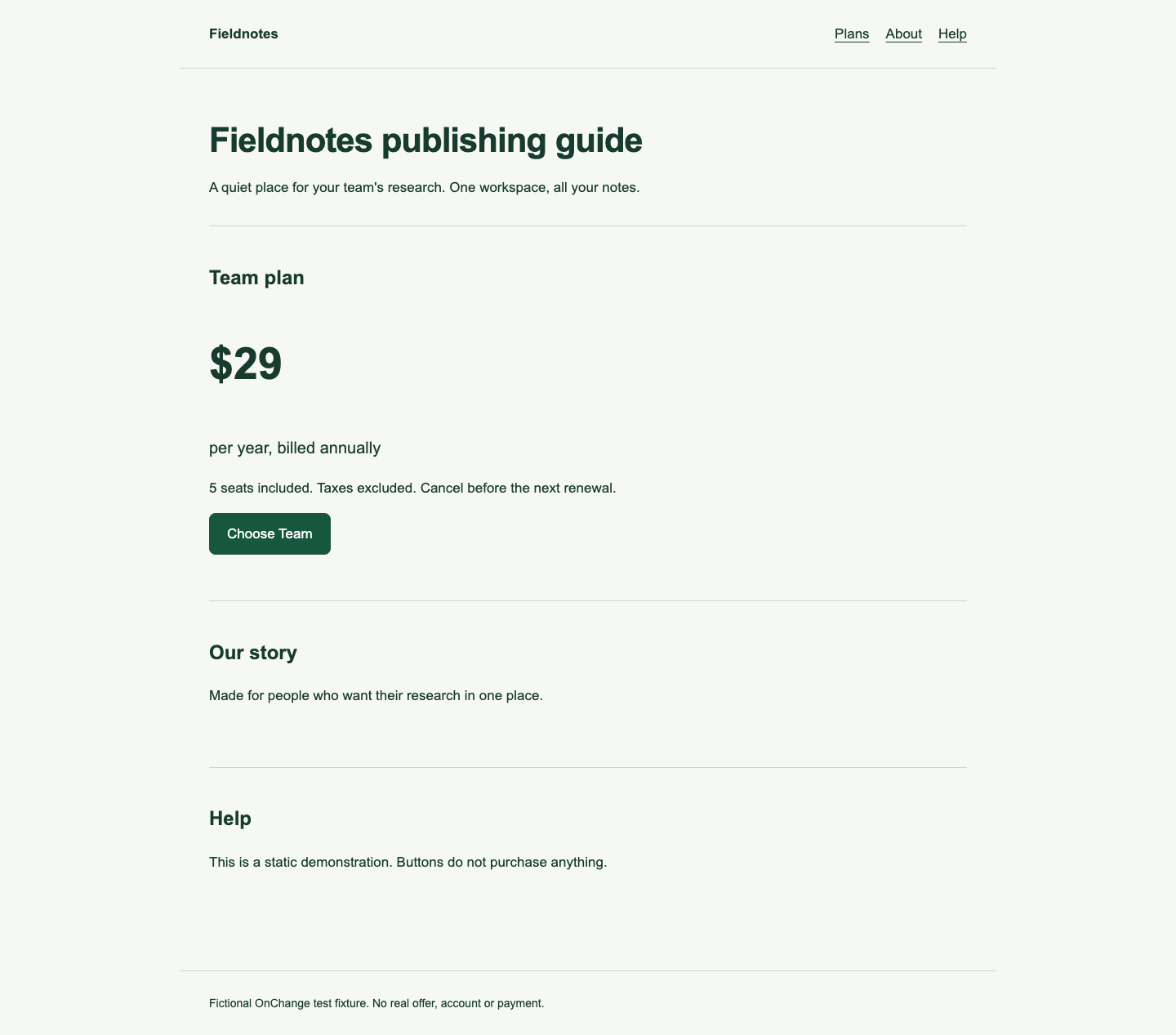
Open the before fixture and the after fixture. Compare before desktop, after desktop, before mobile and after mobile. The JSON record contains the extracted robots values and the actual image hashes.
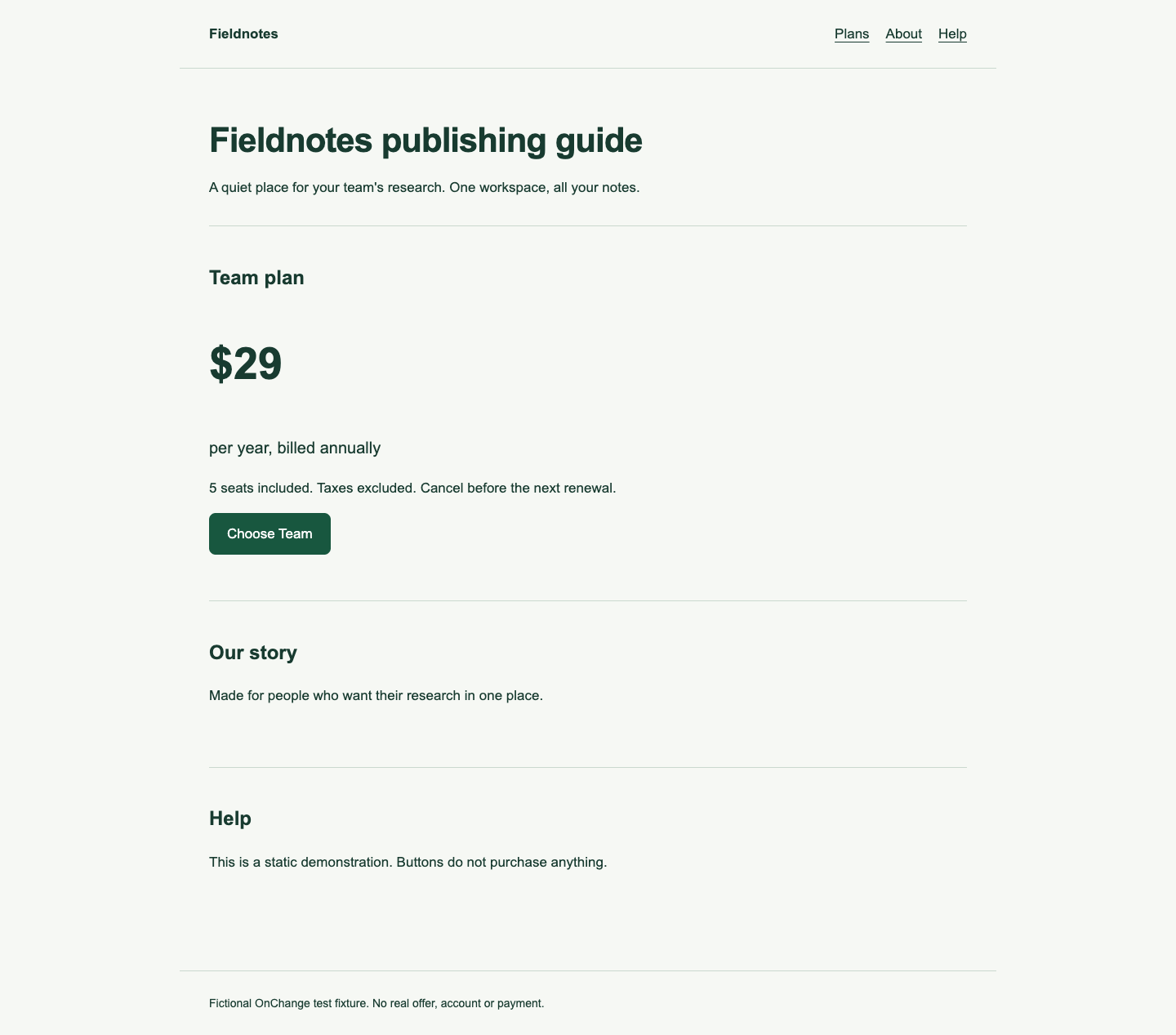
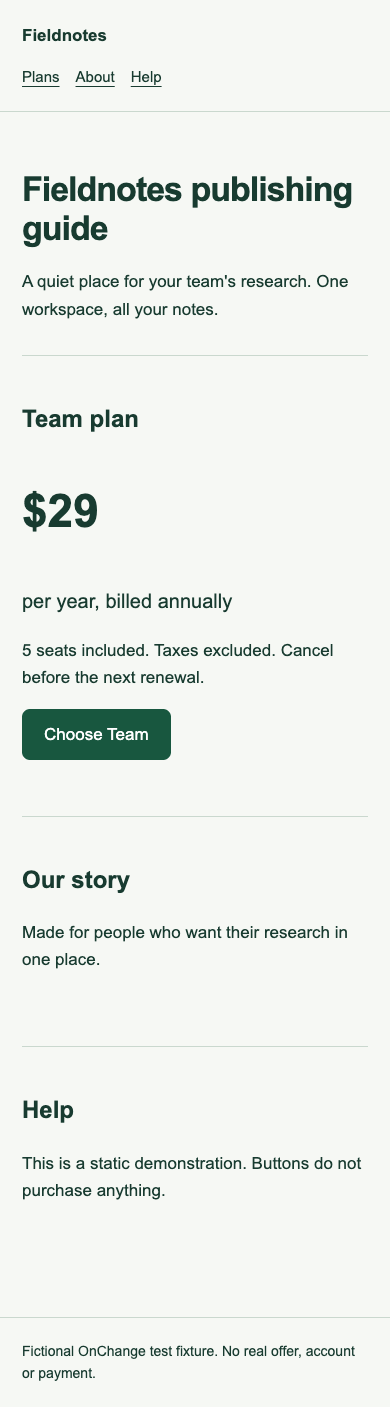
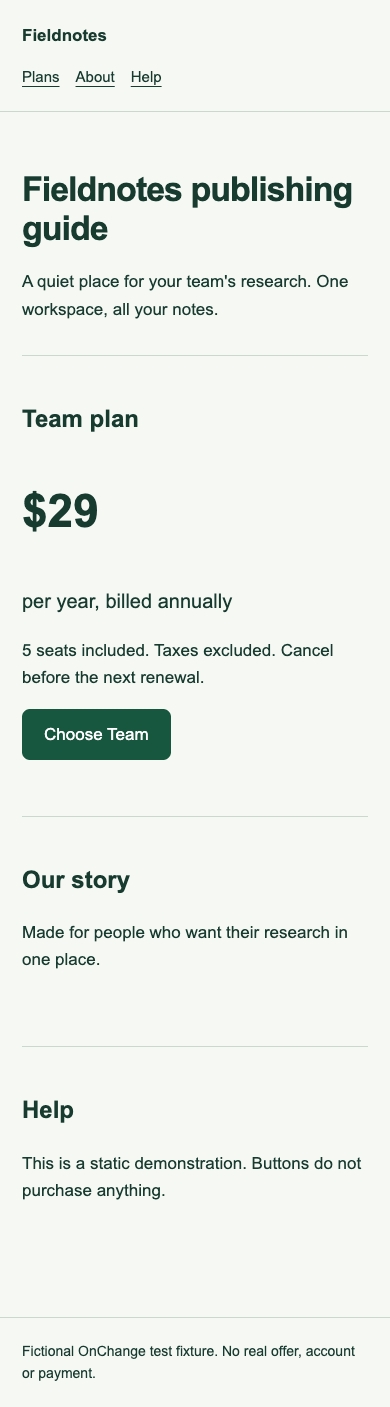
The fixture host adds X-Robots-Tag: noindex, nofollow to both examples. That is an intentional publishing precaution for fictional pages. The experiment isolates their HTML meta difference; it does not claim that either fixture should be indexed, or that these pages were removed from a real search index.
Decide using the destination environment
For a public production guide intended to appear in search, an unexpected noindex is a reason to pause sign-off and investigate. Check both HTML meta tags and response headers. Identify whether the setting came from a page template, CMS option, deployment variable or proxy response.
For a public preview, noindex may be intentional. Record that exception in the comparison rather than pretending the two environments have identical policy. Confirm the actual production response after release. A note that says “staging only” is insufficient if the same header is accidentally shipped to production.
Do not remove indexing protection from a preview merely to make a comparison show zero differences. Also, noindex is not access control: it does not make confidential content private. The current OnChange release checker requires publicly reachable preview URLs and does not inject credentials into protected previews.
A release record that answers the next question
Record the intended indexing state for each environment, the exact changed value, the page URL and capture time. Add the owner and action: restore the production directive, retain a justified preview exception, or investigate an unknown source. The review should distinguish a deliberate difference from missing evidence.
After deployment, request the production URL again and preserve its response. Search appearance is asynchronous and depends on crawling and indexing; a corrected response is not proof of immediate inclusion. Use the site's verified webmaster tools for URL inspection where available.
The release evidence pack shows where to keep this decision alongside screenshots, automated findings and incomplete captures. The canonical and noindex checklist covers the broader release process.
Method and limits
Captured 13 October 2026 at 17:14 UTC in Chrome 155.0.8059.40 on macOS, desktop 1440 × 900 and mobile 390 × 844 CSS pixels, scale 1. The harness asserted that the screenshots matched and the after-page metadata contained noindex, follow. No search engine was queried to infer an indexing outcome.
Download the fixture sources, evidence JSON and reproduction notes and self-contained reproduction kit. This demonstration establishes a limitation of these particular checks, not the frequency or commercial effect of noindex mistakes across the web.